I’m happy to start sharing some thoughts on topics I work with and think about often: enterprise integration, AI, data flows, and the real complexity behind modern digital systems.
For this first article, I wanted to reflect on a simple idea:
AI will not fix bad integration architecture.
Automation and AI agents can bring a lot of value, but only if the foundations are solid: APIs, data ownership, monitoring, security, error handling and governance. Otherwise, AI may not solve the complexity. It may simply expose it faster.
Here is why I think integration architecture is becoming even more important in the AI era.
A few years ago, most integration discussions were about APIs, batches, events, and data synchronization. Today, the discussion is changing, now we talk about AI agents that can understand, decide, and act. But the more I work around enterprise systems, the more I feel that one important topic is often missing from the discussion.
In a demo or PoC everything looks simple.
- The AI understands the question.
- It retrieves the right data.
- It triggers an action.
- It returns a beautiful answer.
But in a real company things are rarely that clean. Because, there are legacy systems, there are busines rules hidden inside excel files, there are api with missing documentation, there are fields that mean different things depending on different systems, there are manual workarounds that nobody documented, there are integrations that work only because someone knows how to restart them when they fail. And now we want to plug AI into that environment, that is where things become interesting!
The dream: AI connected to everything
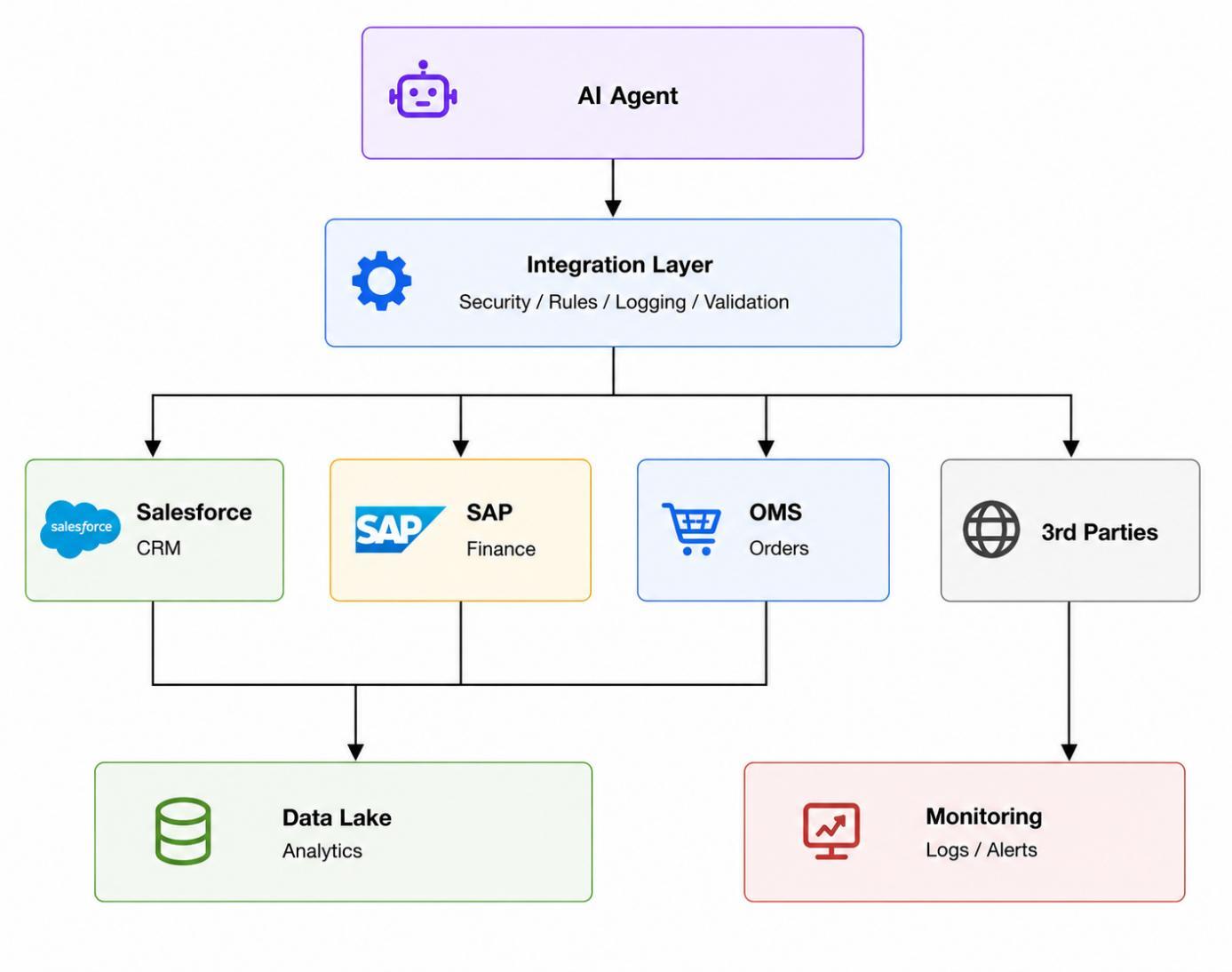
In theory this is powerful. An AI agent could help a business user understand customer data, check an order status, detect issues, suggest next actions or even trigger workflows. But this beautiful picture hides a more difficult question:
Are the systems ready to be connected to AI safely?
Because if they are not, AI will not fix the problem. It may simply make the problem faster.
When companies talk about AI they often focus on the visible part: the prompt, the chatbot, the ai assistant, the UX.
But behind the scenes the hard part is still the same:
- Where is the source of truth?
- Which system owns the customer?
- Which system owns the order?
- Which system owns pricing?
- Which API should be used?
- What happens if one system is down?
- What happens if the data is outdated?
- Who validates the action before it becomes official?
- How do we trace/monitor what happened?
This is not only an AI topic.
This is an integration topic.
A simple example
Imagine a user asks:
« Can we update this customer account? »
AI needs to know:
- Who is the customer?
- Which account is the right one?
- Is Salesforce the source of truth?
- Is MDG or SAP the master system?
- Does the user have permission?
- Is the data complete? What about data quality?
- Should the update be automatic or validated?
- What if the update fails?
- Where do we log the action?
This is why I believe the real challenge of AI in enterprise is not only intelligence. The real challenge is controlled execution.
Bad integration becomes dangerous with AI
A weak integration flow is already painful when humans are using it.
But when AI starts using the same flow, the risk can become bigger.
Imagine this situation, before AI:
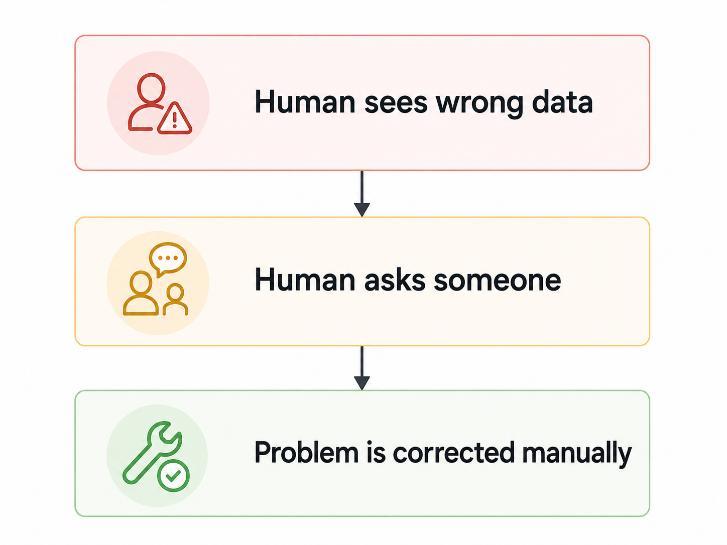
Now imagine the AI version:
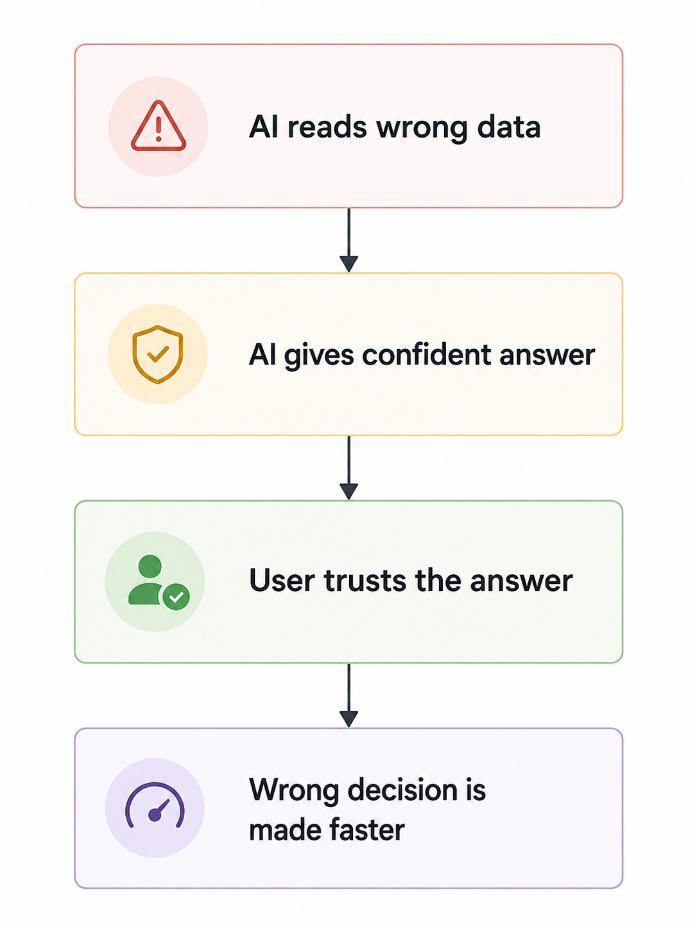
This is the danger.
AI can sound confident even when the underlying data is incomplete, outdated or misunderstood.
This why AI cannot be separated from architecture, data governance, security, integration patterns and observability.
Example: AI connected to customer data
A business user asks:
« Can this customer place an order? »
The AI might need to check several systems.
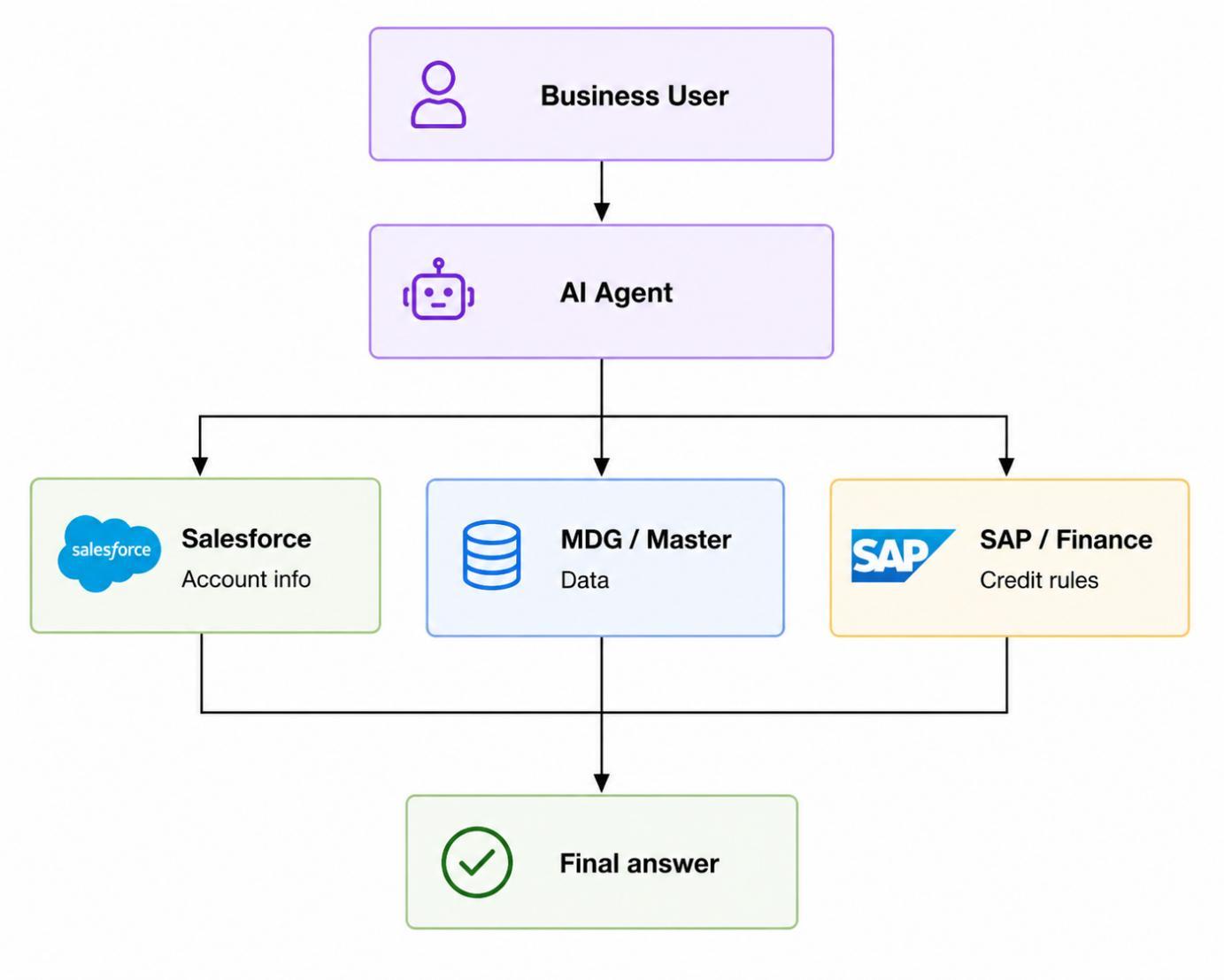
The question sounds simple. Technically, it is not.
The AI needs to understand:
- Whether the account is a prospect or a real customer
- Whether the customer exists in the master data system
- Whether the account is a Sold-To, Ship-To, Bill-To, or Payer
- Whether the financial status allows ordering
- Whether the current context permits the order creation flow
If these rules are not clear in the architecture, AI will not invent the right governance. Instead, it will create confusion.
The boring foundations are becoming strategic
Many topics that sounds boring are becoming very strategic because of AI.
Things like:
- API governance
- Data contracts
- Source of truth definition
- Identity and access management
- Audit logs
- Error handling
- Retry mechanisms
- DLQ
- Monitoring dashboards
- Event design
- Data classification
- Human validation steps
These are not secondary topics anymore. They are the foundation that decides wether AI can be trusted in real business workflows.
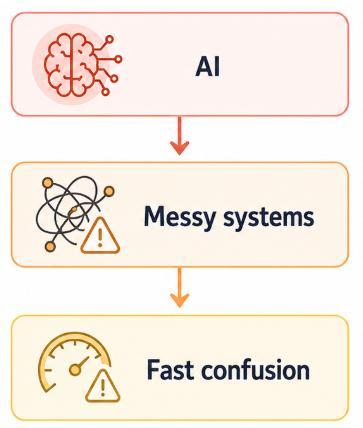
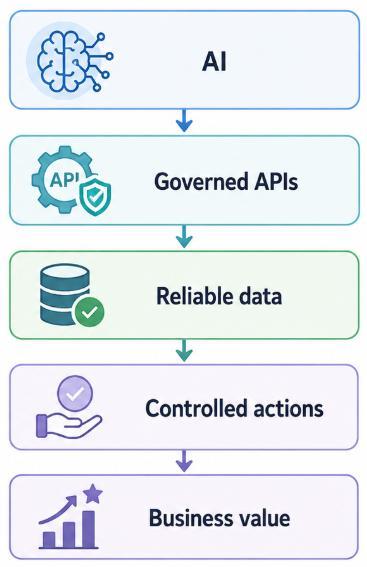
A simple way to see it:
Without strong foundations:
With strong foundations:
Before implementing AI, ask integration questions :
Before asking:
Which AI tools should we use?
Maybe companies should ask:
Are we ready to let AI interact with our systems?
Some important questions:
Architecture
- Which systems will AI access?
- Which APIs are exposed?
- Do we go direct through an API gateway or through an integration layer?
- What is the target pattern: real-time, batch, event driven, or hybrid?
Data
- Which system is the source of truth?
- Is the data fresh enough?
- Is the data classified?
- Is there PII?
- Are there data quality rules?
Security
- Who is the AI acting on behalf of?
- What permissions does it have?
- Can it read only or also write?
- Do we need approval before execution?
Operations
- How do we monitor AI-triggered flows?
- How do we retry failed actions?
- Where do errors go?
- Who receives alerts?
- How do we audit what happened?
Business
- Which actions should remain human controlled?
- Which decisions can be assisted by AI?
- Which decisions can be automated?
- Who is accountable if something goes wrong?
These questions may not sound as exciting as a live AI demo. But they are exactly the questions that make the difference between a nice PoC and a production ready enterprise solution.
AI agents need integration guardrails
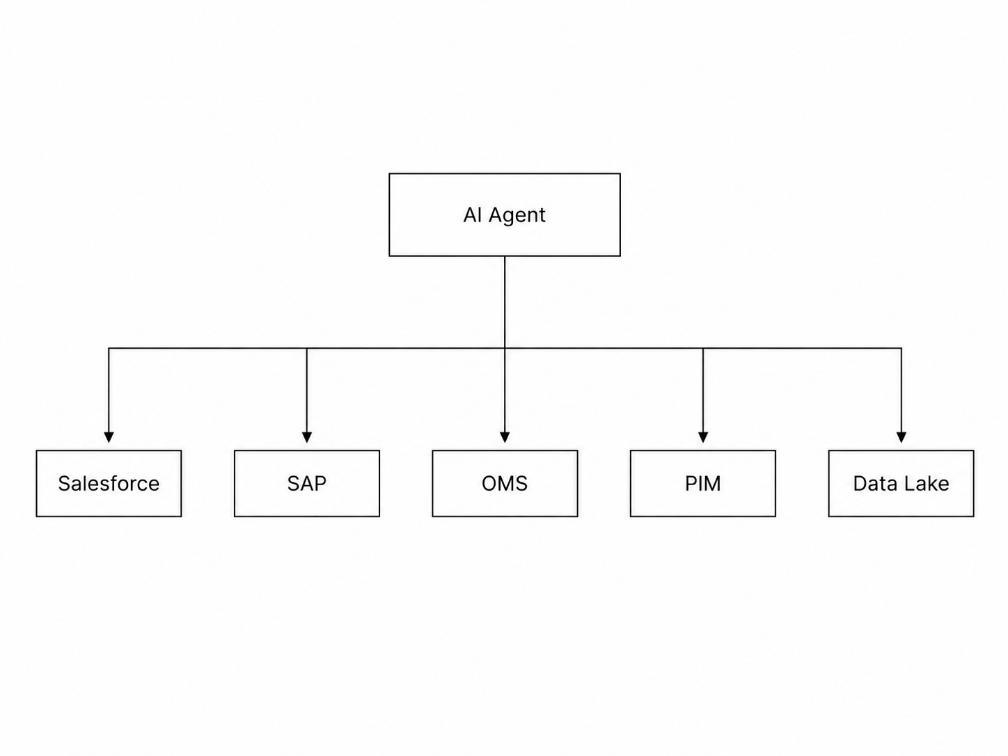
One of the biggest mistakes would be to give AI direct access to everything.
That may look efficient at first but it can quickly become risky.
A better model is to put AI behind controlled services and clear business capabilities.
Bad pattern:
Better pattern: the stronger pattern routes AI through a controlled capability layer that handles security, logging, rules, validation and audit.
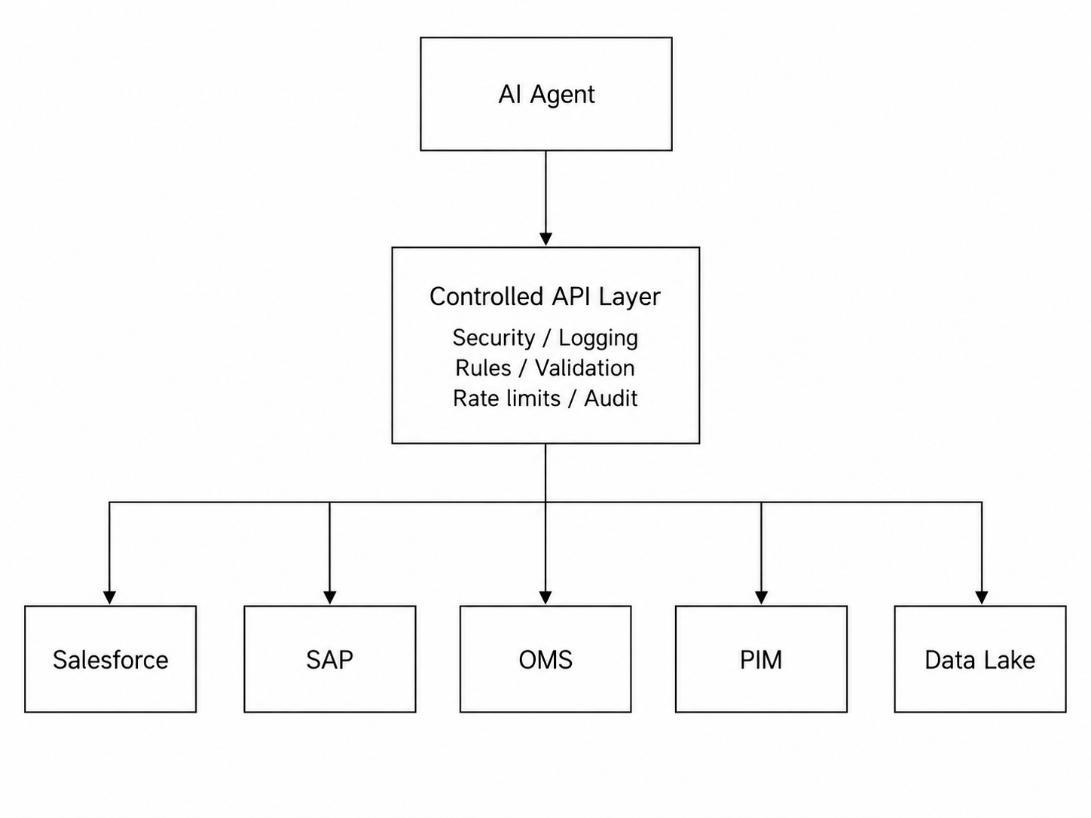
The goal is not to block AI. The goal is to make it safe, observable and useful.
AI should not become a hidden shortcut around architecture principles.
What this means for integration leads
In my opinion, AI will not make integration roles less important. It will make them more important. The integration lead, architect or technical-functional project manager will increasingly need to answer questions like:
- How should AI connect to enterprise systems?
- Which actions should be exposed as APIs?
- Which workflows are safe to automate?
- What needs human validation?
- How do we monitor and audit AI actions?
- How do we avoid point to point chaos?
- How do we design reusable business capabilities?
This is the shift.
Integration is no longer just about moving data from system A to system B.
It is becoming about orchestrating humans, systems, data and AI agents in a controlled way.
My personal view
I am optimistic about AI.
I think it can help teams move faster, reduce repetitive work, improve support, summarize complex information and make enterprise systems easier to use.
But I am also careful.
Because in real companies, values does not come only from having smart AI model. Value comes from connecting AI to the right systems with the right data, the right permissions, controls and monitoring.
AI can be a powerful accelerator.
If the architecture is weak, it can accelerate confusion.
That is why I believe that companies should not treat integration as a secondary technical topic in their strategy.
Integration is part of the AI strategy.
Practical takeaway
AI will not fix bad integration architecture.
It will reveal it.
And in some cases, it will amplify it.
Before giving AI more autonomy, companies need to strengthen the foundations: APIs, data ownership, security, monitoring, error handling, governance, and business validation.
The future of enterprise AI will not only belong to the companies with the best models.
It will belong to the companies that know how to connect AI safely to their business reality.
That is where integration architecture becomes more important than ever.